
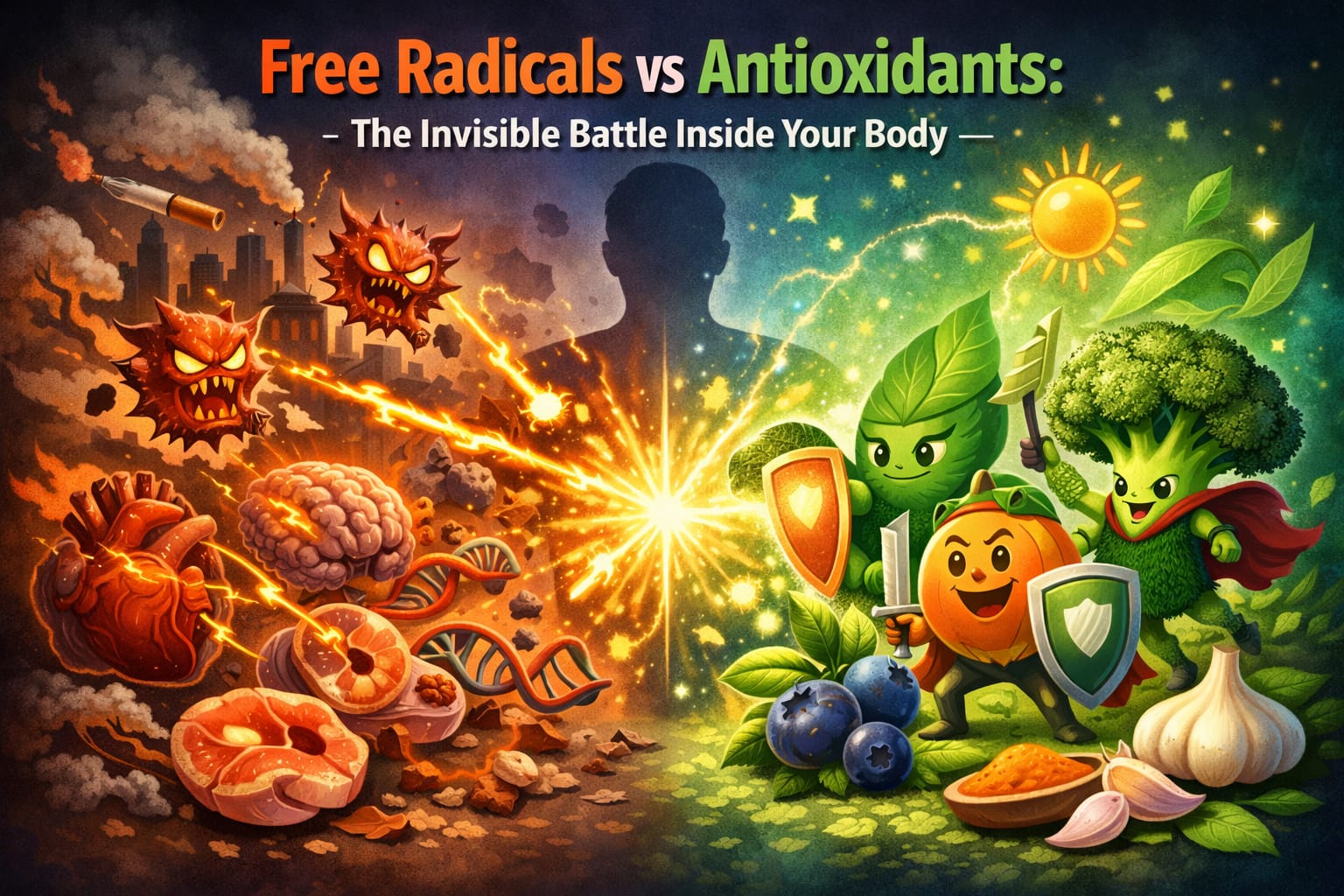
Free Radicals and Antioxidants: The Invisible Battle Inside Your Body

Have you ever wondered why fruits and vegetables are often called “protective foods”? Or why antioxidants are such a buzzword in health conversations?
The answer lies in a silent, ongoing battle inside our bodies—between free radicals and antioxidants.

Let’s break it down in simple terms.


What Are Free Radicals?

Free radicals are unstable molecules that are naturally formed in our body during normal activities like:

  • Breathing
  • Digesting food
  • Physical exercise

They are also increased by external factors such as:

  • Pollution
  • Cigarette smoke
  • Excessive sunlight (UV rays)
  • Stress
  • Processed foods

Because free radicals are unstable, they try to “steal” electrons from healthy cells. In doing so, they *damage cells, proteins, and even DNA. This process is called *oxidative stress.


Why Are Free Radicals Harmful?

When free radicals accumulate beyond control, they can contribute to:

  • Premature ageing (wrinkles, dull skin)
  • Inflammation
  • Weakened immunity
  • Heart disease
  • Diabetes
  • Certain cancers
  • Neurodegenerative disorders like Alzheimer’s disease

Think of free radicals like sparks from a fire—a few are normal, but too many can cause serious damage.


What Are Antioxidants?

Antioxidants are the body’s natural defense system against free radicals.

They work by:

  • Donating electrons to free radicals
  • Neutralizing them
  • Preventing cell damage

The good news?
Our body makes some antioxidants on its own—but we rely heavily on our diet for the rest.


Common Antioxidants You Should Know

Some well-known antioxidants include:

  • Vitamin C – boosts immunity, improves skin health
  • Vitamin E – protects cell membranes
  • Beta-carotene – supports eye and skin health
  • Selenium – helps repair damaged cells
  • Flavonoids & polyphenols – powerful plant-based antioxidants

Best Natural Sources of Antioxidants

You don’t need expensive supplements to fight free radicals. Nature has already provided plenty:

Fruits

  • Berries (blueberries, strawberries)
  • Oranges, lemons
  • Pomegranate
  • Apples
  • Grapes

Vegetables

  • Spinach
  • Broccoli
  • Carrots
  • Tomatoes
  • Beetroot

Other Powerful Sources

  • Green tea
  • Dark chocolate (in moderation!)
  • Nuts and seeds
  • Turmeric
  • Garlic

👉 Rule of thumb:
The more colorful your plate, the richer it is in antioxidants.


Do You Need Antioxidant Supplements?

For most healthy individuals, a balanced diet is more than enough.

Supplements may be helpful:

  • In people with poor dietary intake
  • During illness or high oxidative stress
  • When prescribed by a healthcare professional

However, excessive antioxidant supplementation can sometimes do more harm than good. Always consult a doctor before starting supplements.


Simple Lifestyle Tips to Reduce Free Radical Damage

Along with eating antioxidant-rich foods:

  • Quit smoking
  • Limit alcohol intake
  • Exercise regularly (but avoid over training)
  • Get adequate sleep
  • Manage stress through yoga, meditation, or breathing exercises
  • Protect your skin from excessive sun exposure

The Takeaway

Free radicals are unavoidable—but they don’t have to control your health.

By:

  • Eating a diet rich in fruits and vegetables
  • Maintaining a healthy lifestyle
  • Being mindful of stress and pollution exposure

you can keep oxidative stress in check and support long-term health, vitality, and graceful ageing.

Small daily choices make a big difference—inside your body, every single day.